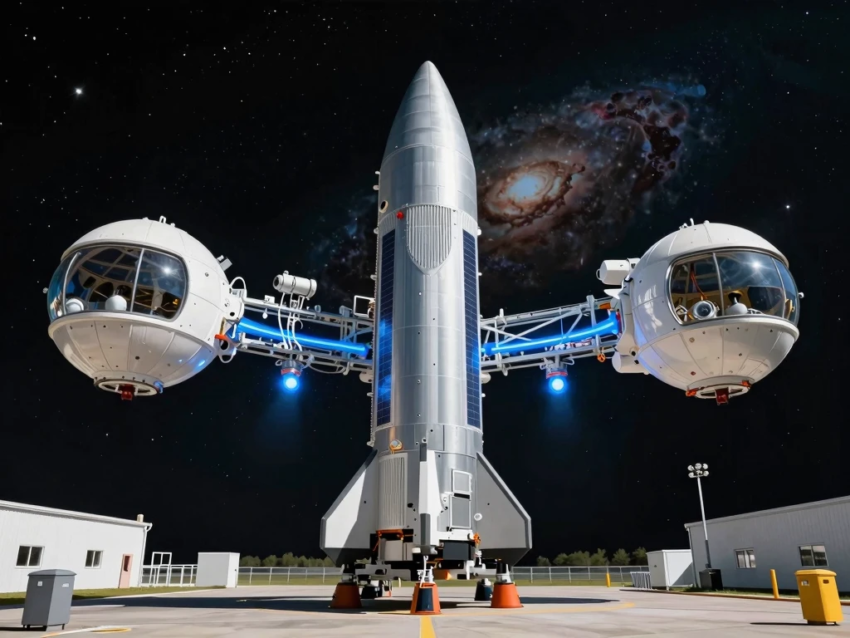
Space technology represents one of the most advanced and inspiring fields of modern science. It focuses on the development of tools, systems, and innovations that allow humans to explore outer space, study celestial bodies, and improve life on Earth through space-based applications. From satellites orbiting the planet to deep space missions exploring distant galaxies, space technology continues to push the boundaries of human knowledge.
In recent years, space technology has evolved rapidly due to advancements in engineering, artificial intelligence, robotics, and materials science. Organizations like NASA, ESA, ISRO, and private companies such as SpaceX are driving innovation at an unprecedented pace.
This article explores the major innovations in space technology, its real-world applications, and the future trends that will shape space exploration in the coming decades.
What is Space Technology?
Space technology refers to the collection of technologies used for space exploration, satellite communication, space travel, and scientific research beyond Earth’s atmosphere. It includes spacecraft, rockets, satellites, space stations, telescopes, and robotic probes.
The main goal of space technology is to understand the universe and utilize space-based systems to improve life on Earth. It plays a crucial role in communication, navigation, weather forecasting, defense, and scientific discovery.
Major Innovations in Space Technology
Space technology has seen groundbreaking innovations that have revolutionized how we explore and utilize space.
1. Reusable Rockets
One of the most significant innovations is the development of reusable rockets. Companies like SpaceX have created rockets that can return to Earth and be launched again, significantly reducing the cost of space missions.
Reusable rocket technology has made space exploration more affordable and sustainable.
2. Advanced Satellites
Modern satellites are more powerful, compact, and efficient than ever before. They are used for communication, Earth observation, navigation, and scientific research.
These satellites can capture high-resolution images of Earth, monitor climate change, and support global communication networks.
3. Space Telescopes
Space telescopes like the James Webb Space Telescope allow scientists to observe distant galaxies, stars, and planets without interference from Earth’s atmosphere.
These telescopes provide valuable insights into the origins of the universe.
4. Artificial Intelligence in Space
AI is increasingly being used in space missions for data analysis, navigation, and autonomous decision-making. AI-powered systems help spacecraft operate efficiently without constant human control.
5. Robotics and Rovers
Robotic systems like Mars rovers are used to explore planetary surfaces. These robots can collect samples, analyze soil, and send data back to Earth.
They play a crucial role in exploring environments that are too dangerous for humans.
Applications of Space Technology
Space technology is not limited to space exploration; it has numerous applications that benefit everyday life on Earth.
1. Communication Systems
Satellites enable global communication by transmitting television signals, phone calls, and internet data across the world.
Without space technology, modern communication systems would not be possible.
2. Navigation and GPS
The Global Positioning System (GPS) relies on satellites orbiting Earth. It helps people navigate roads, track vehicles, and locate destinations with high accuracy.
Industries such as aviation, shipping, and logistics heavily depend on GPS technology.
3. Weather Forecasting
Weather satellites monitor atmospheric conditions and provide accurate weather predictions. This helps in disaster management, agriculture planning, and climate research.
Early warnings of storms, hurricanes, and floods save countless lives.
4. Earth Observation
Satellites observe Earth’s surface to monitor environmental changes, deforestation, ice melting, and urban development.
This data is essential for climate studies and environmental protection.
5. Defense and Security
Space technology plays a key role in national security. Satellites are used for surveillance, intelligence gathering, and secure communication in defense systems.
6. Scientific Research
Space missions help scientists study planets, stars, and cosmic phenomena. This research improves our understanding of the universe and Earth’s place in it.
Space Exploration Missions
Humanity has launched numerous space missions to explore the universe.
- Moon missions such as Apollo programs
- Mars exploration missions like Perseverance Rover
- International Space Station (ISS) for microgravity research
- Deep space missions to study planets and asteroids
These missions have provided valuable knowledge about space conditions and planetary systems.
Benefits of Space Technology
Space technology offers several important benefits:
1. Technological Advancement
Space research drives innovation in engineering, computing, and materials science.
2. Economic Growth
The space industry creates jobs and opens new business opportunities in satellite services and aerospace engineering.
3. Improved Daily Life
Technologies like GPS, satellite TV, and internet services come from space innovations.
4. Disaster Management
Space-based systems help predict and manage natural disasters effectively.
5. Scientific Discovery
Space exploration helps us understand the origin of the universe and the possibility of life beyond Earth.
Challenges in Space Technology
Despite its progress, space technology faces several challenges:
1. High Costs
Space missions require billions of dollars in funding.
2. Space Debris
Old satellites and debris in orbit pose risks to active spacecraft.
3. Technical Complexity
Space missions require highly advanced engineering and precision.
4. Human Safety Risks
Space travel exposes astronauts to radiation and extreme conditions.
5. Limited Resources
Launching and maintaining space systems require significant global cooperation.
Future Trends in Space Technology
The future of space technology is exciting and full of possibilities.
1. Space Tourism
Companies are developing commercial space travel, allowing civilians to experience space.
2. Mars Colonization
Plans are underway to send humans to Mars and potentially establish permanent settlements.
3. Advanced Spacecraft
Next-generation spacecraft will be faster, safer, and more efficient.
4. AI-Powered Missions
Artificial intelligence will play a major role in autonomous space exploration.
5. Space Mining
Future missions may extract valuable minerals from asteroids.
6. Interplanetary Exploration
Humans may explore moons like Europa and Titan for signs of life.
Role of Private Companies in Space Technology
Private companies are revolutionizing space exploration. Organizations such as SpaceX, Blue Origin, and others are reducing costs and increasing accessibility to space.
These companies are also developing reusable rockets, satellite networks, and commercial space travel systems.
Their involvement is accelerating innovation and expanding the possibilities of space exploration.
Impact of Space Technology on Earth
Space technology has a direct and positive impact on life on Earth:
- Improves global communication
- Enhances disaster response systems
- Supports climate monitoring
- Enables accurate navigation
- Advances scientific knowledge
Without space technology, many modern conveniences would not exist.
Conclusion
Space technology is one of the most powerful and transformative fields in human history. It has revolutionized communication, navigation, weather forecasting, and scientific research while opening the door to deep space exploration.
From reusable rockets and advanced satellites to AI-driven missions and future Mars colonization, space technology continues to evolve rapidly. Although challenges such as high costs and space debris remain, the benefits far outweigh the limitations.
As we look toward the future, space technology will play an even greater role in shaping humanity’s destiny beyond Earth. It is not just about exploring space—it is about improving life on our planet and expanding the boundaries of human knowledge.